
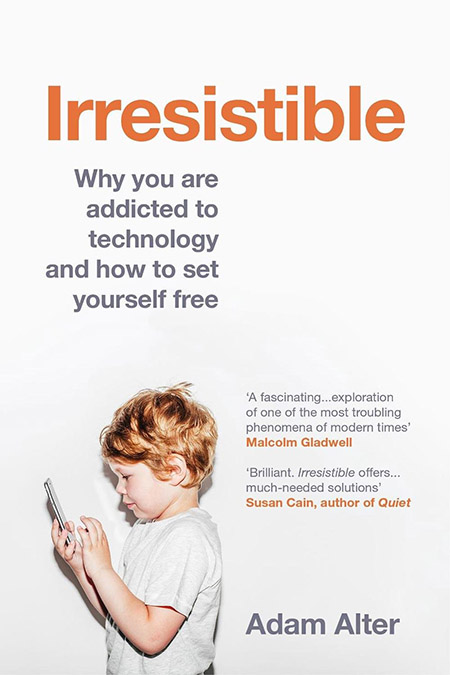
sychologist Adam Alter explains why we're addicted to technology and offers essential solutions for a happier life.
In some ways this is not surprising, as our world is filled with addictive experiences- from social media and messaging, to rolling news and video streaming. Attention spans are decreasing as our time spent glued to our screens are increasing, negatively affecting our ability to relax, sleep, develop relationships and achieve meaningful goals. Psychologist Adam Alter provides insight into why, explains the science behind why we can't seem to stop such behaviour and offers practical advice for using technology differently, in order to lead a happier life, and to set yourself free.
This examination of today's tech-zombie epidemic is worth putting your phone down for' Guardian'Essential reading... Regain control of your time, finances and relationships'Charles Duhigg, author of The Power of Habit.
Buy the book on Fishpond.

Although many youth may not be harmed by heavy SMU, distressed youth may be particularly vulnerable. The aim of this study was to experimentally examine the effects of reducing SMU on smartphones on symptoms of depression, anxiety, fear of missing out (FoMO), and sleep in youth with emotional distress. Compared to the control group, the intervention group showed significantly greater reductions in symptoms of depression, anxiety, and FoMO, and greater increases in sleep.
Read MoreA brief 4-week intervention using screen time trackers showed that reducing social media use (SMU, experimental group) yielded significant improvements in appearance and weight esteem in distressed youth with heavy SMU, whereas unrestricted access to social media (control group) did not.
Read MoreWe greatly appreciate your feedback on this website and would like to know what information you found useful and what services you would like to see next. Please take a couple of minutes to let us know.
survey


